Dynamic pricing for micromobility is one of the most effective levers for improving the profitability of a shared fleet. In a service based on electric scooters, e-bikes or other light electric vehicles, demand is never the same across all areas and time slots. User flows change, vehicle availability changes, operating costs change and the value of each ride can vary significantly depending on where and when it happens.
For this reason, applying one fixed price across the entire service area can limit operating margin. In some zones, the price may be too low compared to demand. In others, it may be too high and reduce usage. The goal is not to increase prices everywhere, but to build a smarter pricing logic: using data, zones and time windows to set rates that reflect the real operating context.
Dynamic pricing for micromobility allows operators to work with variable demand more effectively, improving the relationship between revenue, fleet utilization and operating costs.
Why dynamic pricing for micromobility affects margin
The price of a ride is not just a commercial element. It is an operational lever. It influences the number of rentals, average ride duration, demand distribution and the performance of individual vehicles.
In a micromobility fleet, two identical vehicles can generate very different results. A vehicle positioned near a train station during peak hours may produce more rides than one sitting in a low-demand residential area. In the same way, a ride during a high-demand time slot may have a different economic value from a ride in a moment when many vehicles would otherwise remain unused.
Dynamic pricing for micromobility helps operators read these differences. The objective is to align pricing with the real context in which the rental takes place.
The main variables to consider include:
- starting area and destination, when relevant to the operator’s model;
- time slot, especially during peak or low-demand periods;
- vehicle availability, to avoid imbalances between oversupplied and underserved areas.
This logic is consistent with a principle that is now common across many sectors: pricing can help manage demand, capacity and margin more effectively. Harvard Business Review, in an article explaining that dynamic pricing does not have to alienate customers, highlights how intelligent pricing can improve margins, operations and customer experience when applied with transparency and care. In micromobility, this means using price not as an aggressive lever, but as a tool to make the service more sustainable.
Zone-based pricing: when value changes by area
A city is not a uniform market. Some areas generate steady demand, while others work only at specific times. Some zones are strategic for service visibility, while others produce fewer rides but may still be necessary to guarantee territorial coverage.
Setting rates by zone means recognizing that not all areas have the same economic potential. A high-demand district may support a slightly different price compared to an area where the goal is to stimulate usage.
Dynamic pricing for micromobility can help operators distinguish between high-value zones, areas that need stimulation and areas that should simply be monitored.
High-demand areas
In high-demand areas, the main risk is not having enough vehicles available at the right time. Here, pricing can help protect margin, especially when the operating cost of maintaining availability is high.
Typical examples include:
- train stations and transport hubs;
- university areas;
- business districts;
- tourist zones or areas with frequent events.
In these cases, the price must remain understandable for users, but it can better reflect the value of the service and the pressure on the fleet.
Low-demand areas
In low-demand areas, the problem is different. Vehicles may remain idle for too long. A more accessible rate, a dedicated package or a temporary promotion can help stimulate usage.
This approach is useful when the operator wants to prevent some vehicles from becoming unproductive assets. The topic is directly connected to fleet performance: the article on revenue per vehicle in shared mobility: how to calculate it and improve it explains how to measure the economic contribution of each vehicle.
Time-based rates: adapting pricing to real demand
Time is a decisive variable. The same area can behave very differently throughout the day. A train station may generate strong demand in the morning and late afternoon, while a tourist area may perform better during weekends or central hours of the day.
Dynamic pricing for micromobility makes it possible to set rates that are more consistent with these variations. Pricing does not need to change constantly or become overly complex. Even a simple structure based on time slots can help operators improve margin.
An effective model can distinguish between:
- peak periods, when demand is high and availability must be protected;
- intermediate periods, when pricing can remain stable;
- low-demand periods, when promotions or incentives can increase usage.
This logic helps operators avoid treating every ride in the same way. A ride during a demand peak may have a different impact from a ride taken in a time slot when many vehicles would otherwise remain unused.
The risk of rigid pricing
A fixed rate is easy to communicate, but it can become limiting. If the price is too low during peak hours, the operator loses margin. If it is too high during weak demand periods, it may reduce usage even further.
The value of dynamic pricing for micromobility lies in finding the right balance. Pricing should not become unpredictable. It should become more aligned with the operating context.
Pricing, rebalancing and fleet utilization
Pricing should not be managed separately from the rest of the operation. Rates, vehicle availability, rebalancing and fleet utilization are closely connected.
If an area is constantly underserved, the issue may be rebalancing, but it may also be demand concentration during specific time windows. If another area accumulates unused vehicles, the problem may be linked to pricing, location or limited attractiveness of the service.
For this reason, dynamic pricing for micromobility needs to work together with operational data. A tariff can encourage usage in low-performing areas, protect margin in high-demand zones or support a rebalancing strategy.
The connection with rebalancing is especially important. The article on shared micromobility rebalancing: how to reduce operating costs and increase rides shows how vehicle distribution can directly affect costs and revenue. In this framework, pricing becomes a complementary lever: it does not replace operational management, but it can make it more effective.
How to build a sustainable pricing strategy
A strong pricing strategy does not come from improvisation. It should start from clear data and measurable objectives. Before introducing dynamic pricing for micromobility, operators should understand which problem they want to solve.
Do they want to increase margin in high-demand areas? Stimulate usage in low-performing zones? Reduce inactive vehicles? Improve average revenue per ride or revenue per vehicle?
The answers change the pricing structure.
KPIs to monitor
To avoid decisions based only on perception, operators should track specific KPIs:
- utilization rate, to understand how often vehicles are used;
- average revenue per ride, to evaluate pricing performance;
- revenue per vehicle, to measure the contribution of each asset;
- operating cost by area, to identify where the service is more expensive to manage;
- conversion rate, to check whether pricing discourages or stimulates rentals.
These data points help build a more solid pricing model. Prices should not change simply because demand rises or falls, but because there is a clear economic logic behind the decision.
Test before scaling
Dynamic pricing for micromobility should be introduced gradually. It is useful to start with selected areas, specific time slots or clearly defined use cases. This allows the operator to measure the impact before extending the logic to the entire fleet.
A well-structured test should compare:
- revenue trends before and after the change;
- variation in the number of rentals;
- impact on operating margin;
- possible user reactions.
This approach reduces the risk of introducing rates that users do not understand or that do not match actual demand behavior.
The role of Wevie in dynamic pricing for micromobility
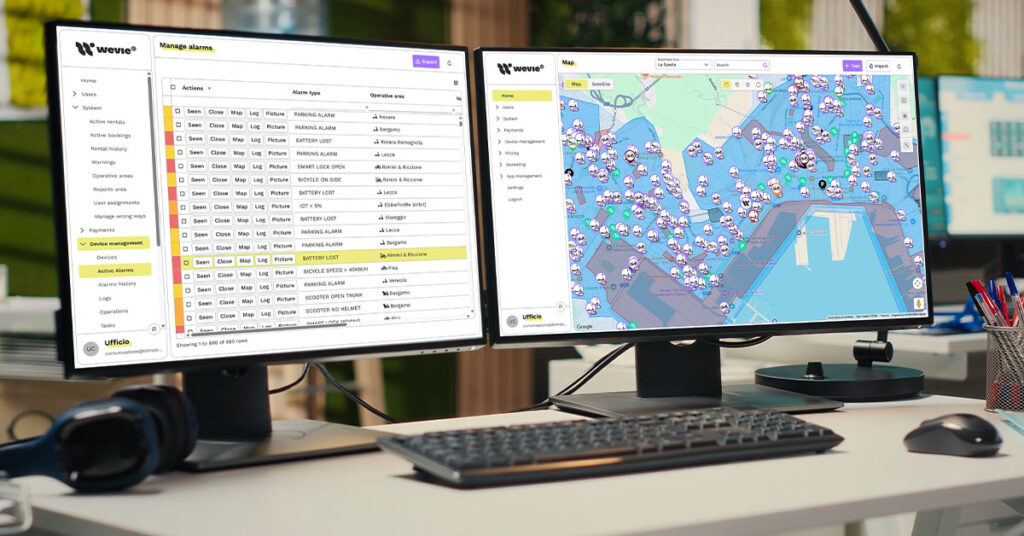
To build an effective dynamic pricing for micromobility strategy, operators need a platform that can connect data, zones, vehicles and rates. Wevie can support this process through tools for configuring pricing plans, subscriptions, packages, discount codes, user wallets and differentiated pricing logic by area, vehicle and time slot.
The value is not only in changing a price. It lies in connecting pricing with fleet operations: vehicle availability, zones, usage, operator tasks and performance data. For a rental operator, this means building more precise strategies, testing different models and understanding which rates actually help improve margin.
To evaluate how these pricing logics could be applied to your service, you can request a Wevie demo and explore how the platform supports fleet management and operational performance.
From pricing to operating profitability
Dynamic pricing for micromobility should not be seen as a simple change in the price list. It is a margin management tool. It connects price, demand, vehicle availability and operating costs.
The topic belongs to a broader view of fleet profitability. To understand how pricing, maintenance, utilization rate, revenue and rebalancing work together in building margin, this article can be linked to the pillar on shared micromobility profitability and fleet operating margins.
Dynamic pricing for micromobility works when it is not perceived as an arbitrary increase, but as a logic that is consistent with the service. When applied with data, gradual testing and operational control, it can help operators improve margin without compromising user experience.
For shared micromobility operators, the next step is to analyze areas, time slots and usage behavior. From there, it becomes possible to build a smarter pricing model that turns price into a concrete lever for economic sustainability.