Managing a fleet of electric vehicles requires more than purchasing high‑performance vehicles. It means coordinating charging sessions, monitoring battery health, optimising routes, scheduling maintenance and ensuring that charging stations are safe and available. All of this is only possible with truly comprehensive electric fleet management software. In a market where fleet managers are investing more and more in digitisation, choosing the right platform is critical to stay competitive.
A reliable platform offers automation of administrative processes and real‑time visibility over each vehicle. Surveys among fleet managers show that more than 90 % plan to increase investment in digital solutions to improve management. Automation allows you to create optimised routes, allocate vehicles intelligently and, thanks to remote diagnostics and geolocation systems, identify faults before they become costly downtime. Safety improves, downtime decreases and productivity increases.
To understand what a software for managing electric scooter fleets is and how it works, see our dedicated article on Scooter Fleet Management Software: The New Solution for Shared and Sustainable Mobility.
Concrete benefits: cost reduction and compliance
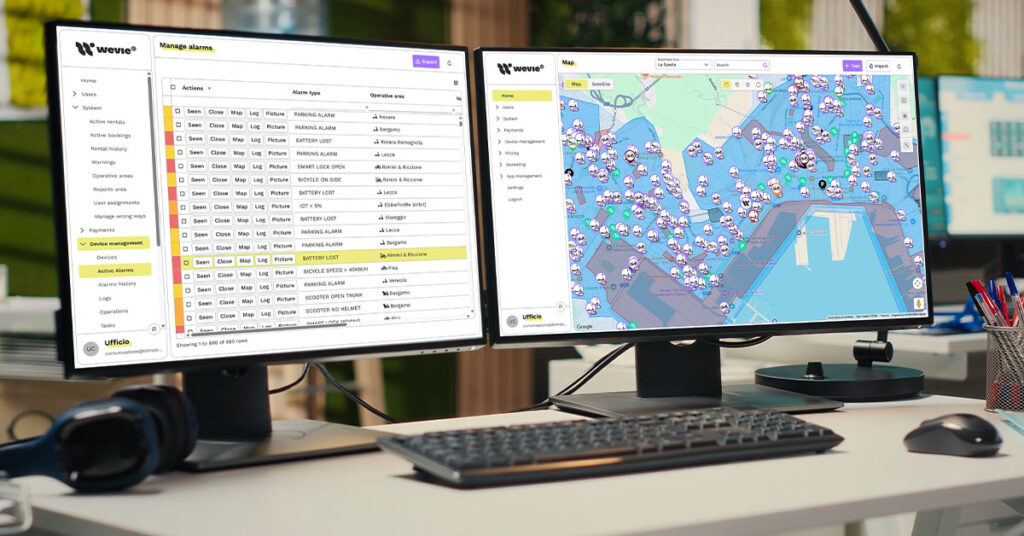
One of the main reasons to adopt advanced software is the reduction of operating costs. By analysing consumption data and routes, platforms suggest the best time to carry out maintenance, reducing breakdowns and extending the life of the vehicles. Dashboards also allow you to monitor batteries, loads and performance. As highlighted in an international report by HERE Technologies, digitisation enables operators to control costs, emissions and downtime by planning recharging and maintenance well in advance. This type of monitoring is essential to comply with safety and environmental regulations and to avoid fines or penalties. Integrating features such as document management and insurance verification ensures regulatory compliance.
Scalability and personalisation
Scalability is another key element to consider. If your company starts with a few vehicles but plans to grow, you need a system capable of managing hundreds of units without losing performance. Modern platforms make it possible to integrate scooters, cars, bikes and hybrid vehicles, adapting to different business models. Personalisation is essential: a dedicated app enables users to book, unlock and pay for the vehicle intuitively. Both charging operators and administrators should have access to advanced functions such as reporting, trip analysis and push notifications.
Trends for 2026: digitisation, AI and electrification
The year 2026 promises to be a turning point for fleet management. In addition to digitisation, the market is being driven by artificial intelligence and the growing electrification of vehicles. Recent analyses show that more than half of fleet managers invest in digital solutions to reduce operating costs. Intelligent cameras and sensors collect driving data to improve safety and prevent accidents. Meanwhile, the share of electric and hybrid vehicles in corporate fleets is set to grow significantly by 2029. This trend makes a platform that supports charging management, route planning based on range and integration with different types of vehicles indispensable. Moreover, the use of predictive algorithms improves vehicle positioning and resource allocation in real time.
To choose the right electric fleet management software, consider the following criteria:
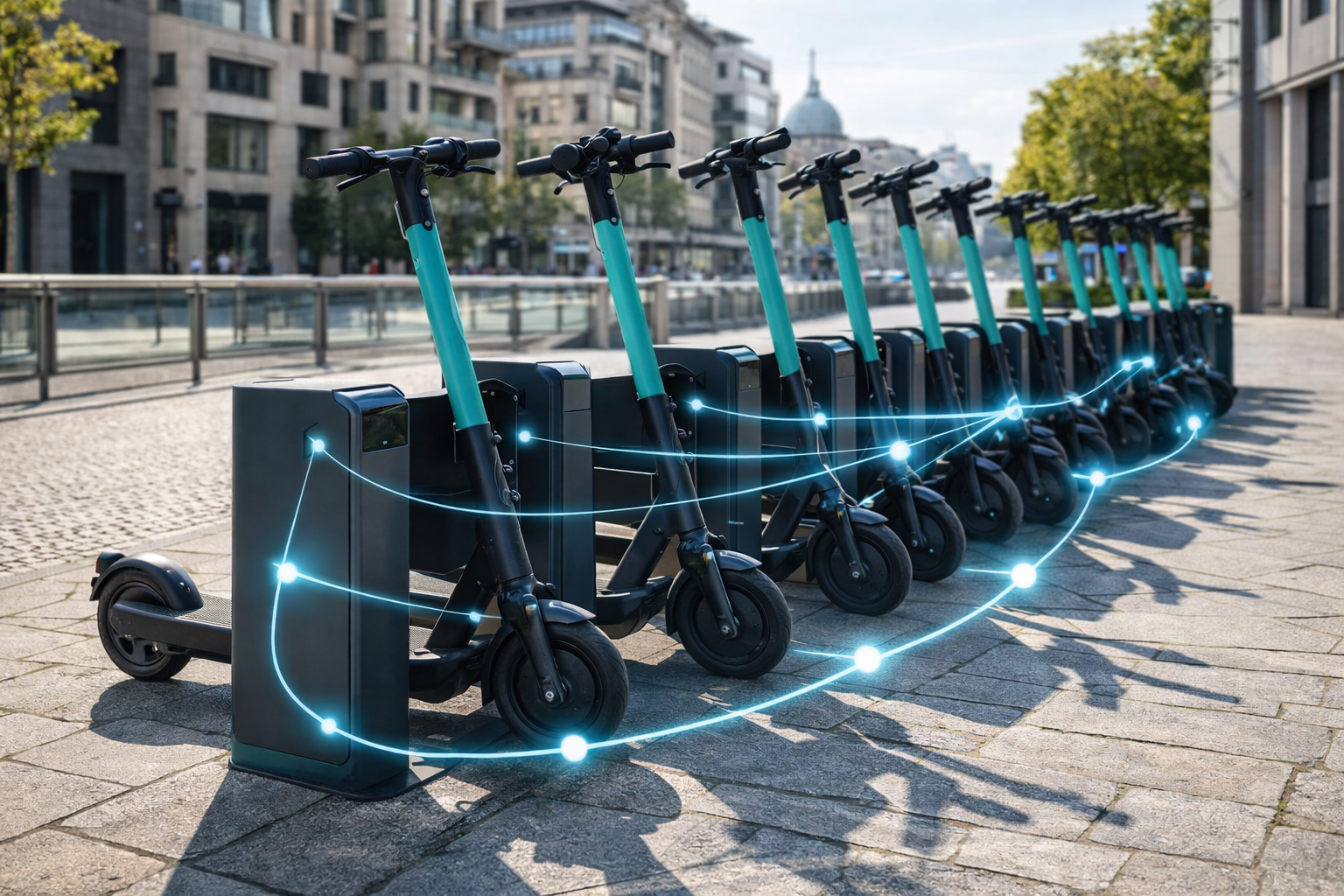
- Charging infrastructure integration: check that the platform integrates with docking stations that allow micromobility vehicles to recharge while remaining operational on the street.
- Data management and analytics: a good software should offer intuitive dashboards, generate customised reports and allow data export for in‑depth analysis.
- Security and access control: it is essential to define roles and permissions for different users and to record all activities for complete control.
- Multilingual support and APIs: if you operate in multiple countries or collaborate with external partners, make sure the platform offers standard APIs and support for multiple languages.
- Support and updates: choose providers that offer customer support and constantly update the platform, integrating new features such as dynamic pricing and AI modules.
Data integration with other systems
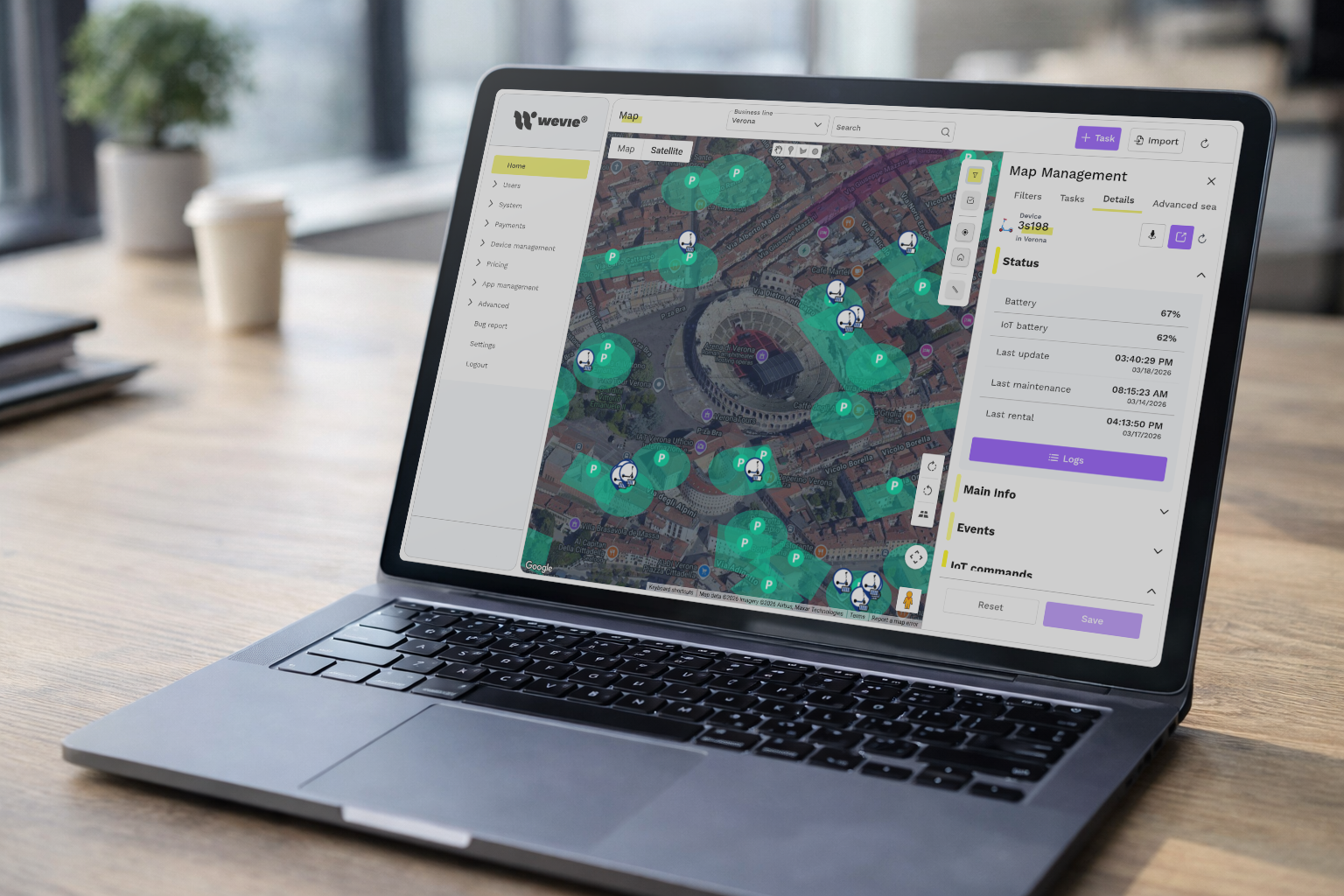
A complete platform must communicate with third‑party systems: ERP, CRM, billing software and payment modules. This enables information to be centralised and administrative management to be simplified. For example, the ability to integrate the software with an accounting system automates billing for rentals and allows real‑time revenue analysis. At the same time, integration with navigation apps such as Google Maps allows you to monitor vehicles on the map and define geofencing areas, improving safety.
To complete this overview, it’s worth explaining how our platform works. Designed to manage fleets of any size, it offers real‑time monitoring, remote control and geofencing that allow you to define parking zones and receive alerts when a vehicle leaves the set boundaries. Thanks to artificial intelligence, repositioning suggestions and analyses of usage habits are provided to optimise the distribution of vehicles. Tariffs can be set dynamically according to area, time and vehicle type, and the customisable app integrates modern payment methods such as Stripe, PayPal and Apple Pay, also supporting group rentals and suspensions.
This platform is not limited to micromobility: it is suitable for corporate fleets, sharing services and long‑term rentals. Thanks to standard APIs such as MDS and GBFS, it can integrate with other mobility platforms, payment systems and support services.
Discover how our platform can support your fleet by explorin its features.
Next steps
In conclusion, choosing electric fleet management software cannot be improvised. You must carefully evaluate scalability, automation, user support and data analysis. It is important to verify that the platform offers advanced security features, integration with charging infrastructure and regulatory compliance. Electrification and digitisation are transforming the mobility landscape: investing in a solid and flexible platform means preparing your business for a future where sustainability and efficiency are the norm.