The shared mobility market is evolving rapidly, and the technologies used to manage a fleet have never been more advanced. Shared Mobility Fleet Management is based on digital platforms that collect and analyze vast amounts of data. According to recent research, over 90% of fleet managers plan to increase investment in digital solutions, and more than half do so to reduce costs and improve efficiency. This article explores the most interesting features and the technological trends that are reshaping the industry.
An article by PTV Group highlights how artificial intelligence is revolutionizing mobility by optimizing routes, improving safety, and reducing environmental impact; in ride-hailing and car-sharing platforms, AI algorithms optimize vehicle distribution based on demand.
To better understand the technological foundation on which these services are built, read our in-depth article Scooter Fleet Management Software, which explores the features of dedicated software.
AI and machine learning: the core of fleet sharing
Artificial intelligence is revolutionizing shared mobility fleet management. Thanks to machine learning, systems can analyze data collected by vehicle sensors and predict demand, optimize routes, and prevent failures. For example, predictive algorithms suggest where to reposition vehicles based on user habits and historical usage data. This reduces downtime and increases availability. Smart cameras installed on vehicles or inside the cabin, in the case of shared cars, help identify dangerous behaviors, protecting users and operators.
Machine learning is also used to optimize pricing. By analyzing demand in real time, the software can adjust rates to maximize revenue. During peak hours or in high-demand areas, prices can increase, while discounts can be offered during periods of lower demand. This dynamic pricing model not only increases profits, but also makes it possible to manage the flow of users more effectively.
Sensors and telemetry: the eyes and ears of the fleet
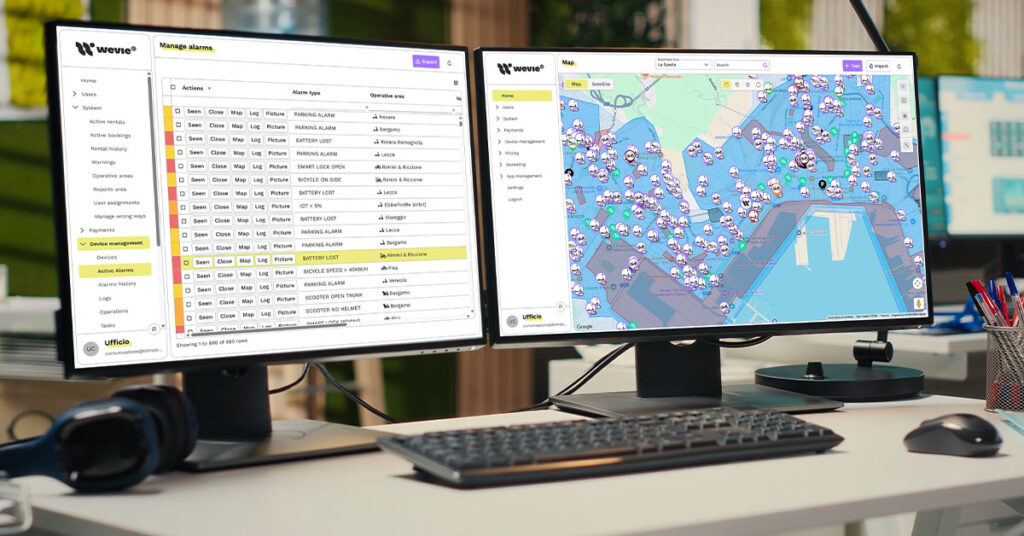
Sensors play a crucial role in data collection. Each vehicle is equipped with GPS modules, accelerometers, gyroscopes, and battery sensors that provide information on location, speed, range, and mechanical condition. This data is transmitted to the control center and analyzed in real time. Remote diagnostics make it possible to identify faults before serious problems occur. For example, if the system detects a sudden drop in battery level, it can send an alert and withdraw the vehicle from service.
Geofencing is another key technology for shared mobility fleet management. By defining virtual areas on the map, the operator can set zones where vehicles can circulate freely and others where speed is limited. If a vehicle exits the defined area, the platform sends a notification and can reduce the speed or block the vehicle. This functionality is important for complying with regulations and protecting users. For those managing electric vehicles, integration with charging infrastructure makes it possible to monitor when and where to recharge vehicles, optimizing downtime.
Data analytics and dashboards
Without data analysis, the information collected would be of little use. Modern platforms offer advanced dashboards that present real-time data through maps, charts, and tables. Operators can view the position of every vehicle, battery status, the most frequent routes, and financial metrics. Detailed reports make it possible to assess usage by area, the effectiveness of promotions, and customer loyalty. Some software solutions make it possible to export data for further analysis with tools such as Power BI or Excel, thereby integrating fleet management with business administration.
Analysis is not only about efficiency; it can also highlight problematic behaviors. For example, if a user frequently parks in unauthorized places, the system can send warnings or apply penalties. Predictive analytics can identify trends and suggest when to expand the service into new areas. One interesting point is that the transition to electric fleets not only improves company image but also reduces management costs.
Integration with APIs and external systems
A shared mobility fleet management platform cannot exist in isolation. Operators need to integrate the system with other applications:
- CRM for customer management;
- ERP for accounting;
- payment systems;
- public transport platforms.
Standard APIs such as MDS and GBFS facilitate data exchange between micromobility platforms and MaaS services. This is particularly useful in cities where several companies operate within a single ecosystem.
Integrations with payment systems such as Stripe, PayPal, and Apple Pay improve the user experience. Instead of entering card details every time, users can pay with one tap. Integration with customer support tools such as Zendesk makes it possible to manage tickets and requests efficiently.
Learn how all these integrations work by reading our article “Electric scooter rental: how to digitize and automate your rental business”.

Among the available solutions, an all-in-one platform makes it possible to centralize all the functions needed for shared mobility fleet management. In addition to standard monitoring and geofencing features, an advanced platform offers dynamic pricing based on area, time, and vehicle type. It includes data analytics tools that suggest where to position vehicles in order to maximize usage and reduce operating costs. Users can access a customizable app to book vehicles, make payments, and join loyalty programs. Integrations with standard APIs and payment systems make adoption simple, even in international contexts.
Wevie also supports shared mobility fleet management and corporate mobility for hotels. Thanks to its modularity, it can be adapted to different business models, from short-term rental to corporate car sharing. Adopting such a complete solution makes it possible to position yourself competitively in a rapidly evolving sector.
If you want to discover the platform’s full potential or see a demo, contact us and request a demo.
Innovation serving fleets
Shared mobility fleet management technologies are becoming increasingly sophisticated and are now based on systems such as telemetry and AI. Investing in an all-in-one platform means reducing costs, improving safety, and offering a higher-quality service. With the right tools, it is possible to monitor every aspect of the fleet, analyze data to make strategic decisions, and integrate the service with other mobility solutions.
For a complete overview of the available solutions and to understand how to best digitize your fleet, you can read our article “Electric fleet management software: how to choose the right solution”.