Shared micromobility rebalancing is one of the most important activities in managing a micromobility fleet. Electric scooters, e-bikes and other light electric vehicles never remain perfectly distributed across a city. Users pick them up in one area, leave them in another, travel at different times of the day and often concentrate demand in very specific urban locations.
For an operator, this creates a simple but critical operational issue: having vehicles available is not enough if those vehicles are not where users need them. A fleet can be large enough on paper and still generate fewer rides than expected because vehicles are poorly distributed.
The goal, therefore, is not to move vehicles constantly. The goal is to understand when a move is actually useful, which vehicles should be relocated, where they should go and with what level of priority. Effective shared micromobility rebalancing can reduce operating costs, increase fleet utilization and improve vehicle availability for users.
Why rebalancing affects operating costs
Rebalancing is not a neutral activity. Every relocation requires time, staff, service vehicles, energy, planning and coordination. When it is managed without reliable data, it can quickly become a significant cost driver without producing a real increase in rides.
Demand in a city is never evenly distributed. Some areas work better in the morning, others in the evening. Train stations, universities, business districts, tourist areas and residential neighborhoods all behave differently. Weather conditions, local events and weekdays can also change demand patterns very quickly.
Shared micromobility rebalancing helps reduce the gap between demand and vehicle availability. If too many vehicles remain in low-demand areas, the operator carries costs without generating enough revenue. If high-demand areas remain underserved, potential rides are lost.
This topic is especially relevant in a phase where shared micromobility can no longer rely only on fleet expansion. McKinsey highlights how the industry is moving toward more sustainable and profitability-oriented growth, also through cost reduction and more efficient operating platforms. From this perspective, shared micromobility rebalancing becomes a practical lever: moving fewer vehicles unnecessarily, placing them in areas with higher demand and reducing avoidable operational work can directly impact costs and ride generation.
The risk of moving too much, or too little
Inefficient rebalancing can create two opposite problems. The first is moving too much. In this case, the operations team works continuously, but part of that work does not create real value. Time, resources and kilometers are spent moving vehicles that could have stayed where they were.
The second problem is moving too little. Vehicles remain idle in low-demand areas, while users cannot find available vehicles where they actually need them. The result is fewer rides, lower user satisfaction and a less productive fleet.
Shared micromobility rebalancing needs to find the right balance between these two extremes. It should not be a repetitive manual routine, but a data-informed operational decision based on priorities.
When does a relocation really make sense?
A relocation makes sense when it increases the likelihood that a vehicle will be used. This means operators should not only look at where there are too many idle vehicles. They also need to understand where those vehicles can generate more value.
In practice, it is worth intervening when:
- a high-demand area has too few vehicles available;
- some vehicles have been inactive for too long;
- an event or time window is expected to increase demand in a specific area.
This approach helps avoid rebalancing based only on habit or on the visual impression that the fleet looks unevenly distributed. The objective is not to make the city look perfectly covered, but to increase the probability of rides in the right places.
The data needed to optimize shared micromobility rebalancing
To make shared micromobility rebalancing effective, operators need to rely on simple but reliable data. It is not necessary to start with overly complex models. The first step is to build a clear view of demand and availability.
The most useful data points include vehicle location, idle time, ride frequency, peak usage hours and areas where users most often look for a vehicle. These elements help identify where the fleet is generating value and where it is absorbing resources without enough return.
A good analytics system should help answer three operational questions:
- Where are vehicles missing compared to expected demand?
- Which vehicles have been idle for too long?
- Which relocations can generate more rides compared to the cost of the intervention?
These questions make rebalancing more concrete. The focus is no longer on moving vehicles in a generic way, but on choosing actions that have an economic rationale.
Utilization rate and low-demand areas
One of the most useful indicators is the utilization rate, which measures how often vehicles are actually used. If a vehicle is available but rarely rented, it may be in the wrong area or in a time window with limited demand. In both cases, the data helps the operator decide whether to move it, continue monitoring it or activate incentives.
Low-demand areas should not always be abandoned. In some cases, they are useful for maintaining territorial coverage or meeting service requirements. However, the operator needs to understand how much it costs to keep vehicles in those areas and what return that decision produces.

Rebalancing, maintenance and inactive vehicles
Shared micromobility rebalancing should not be managed separately from maintenance. A vehicle may be underused because it is in the wrong location, but also because it has a technical issue, low battery level or an unresolved alert.
Before relocating a vehicle, operators should understand whether that vehicle is actually ready to be rented. Moving a vehicle that then remains unavailable only increases costs without improving the service.
This connection between rebalancing and maintenance becomes even more important as the fleet grows. The article on predictive maintenance for shared mobility fleets explains how alerts, diagnostics and maintenance history can help reduce downtime and repair costs.
Similarly, when the main issue is understanding which vehicles are not generating value, this topic should be connected to the article on inactive vehicles in shared mobility fleets: how to identify them and bring them back to revenue. Rebalancing is more effective when it starts from a correct understanding of inactivity.
How to reduce rebalancing costs
Reducing costs does not simply mean moving fewer vehicles. It means making relocations more targeted. One fewer intervention can be positive if it avoids unnecessary work, but negative if it leaves a high-demand area uncovered.
Operators should therefore focus on the quality of the decision. An operations team can work better when it receives clear instructions: which vehicles to pick up, where to move them, with what priority and within which time window.
To optimize costs, operators should work on three key levers:
- time-based planning, aligned with the moments when demand changes;
- area prioritization, distinguishing high, medium and low-potential zones;
- clear operational tasks, reducing unnecessary trips and downtime.
These levers help turn rebalancing from a manual and expensive activity into a more controlled process. The difference becomes especially visible when fleets operate across multiple cities or in areas where demand changes quickly.
The role of Wevie in operational rebalancing
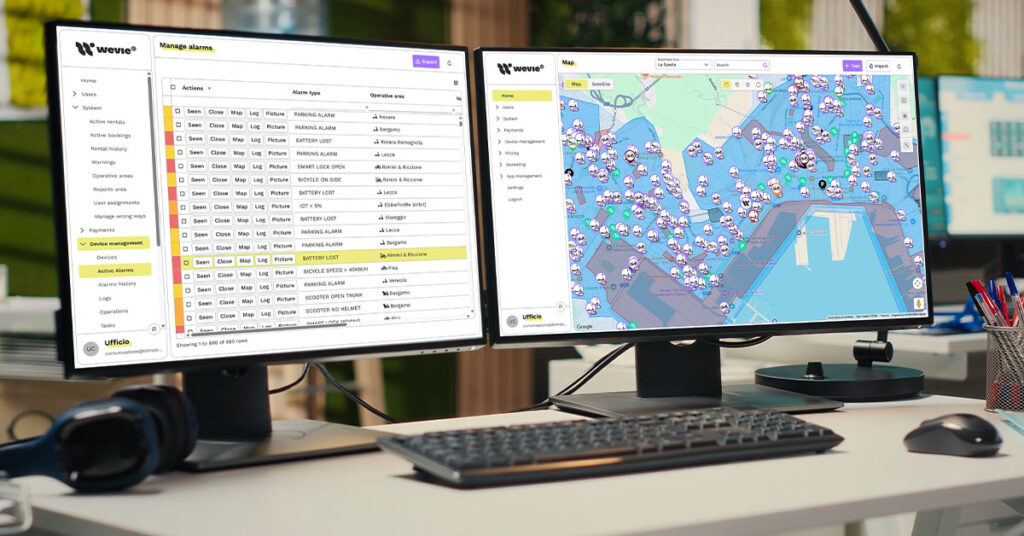
In this context, a platform like Wevie can help operators manage rebalancing in a more structured way. Real-time vehicle monitoring, zone and geofencing management, vehicle status, errors and alerts, operator task management and rebalancing suggestions make it possible to connect vehicle location with operational decisions.
The value is not only knowing where vehicles are. It is understanding which vehicles should be moved, which ones need a technical check first, which are idle in low-performing areas and which zones need more availability. For a rental operator, this means reducing ineffective manual work and focusing on actions that can actually increase rides.
To understand how these capabilities can support day-to-day fleet operations, explore the Wevie features for operational fleet management.
Rebalancing and fleet profitability
Shared micromobility rebalancing has a direct impact on fleet profitability. When vehicles are better distributed, the probability of rides increases. When interventions are more targeted, operating costs decrease. When data is analyzed consistently, the operations team works with less improvisation.
This topic should therefore be considered together with the other factors that determine fleet profitability: utilization rate, maintenance, pricing, inactive vehicles, cost per ride and operational dashboards. For a broader perspective, the pillar article on shared micromobility profitability and fleet operating margins explains how these levers are connected.
Rebalancing is not just a logistics issue. It is an economic decision. Every relocation should have a reason, an estimated cost and an expected impact. When this logic becomes part of daily operations, the fleet becomes easier to read, manage and optimize.
From vehicle redistribution to revenue control
Optimizing shared micromobility rebalancing means moving from urgent, reactive management to data-driven operations. It is not enough to see that some vehicles are idle. Operators need to understand whether it is worth moving them, where they should be relocated and what return can reasonably be expected.
In summary, an effective rebalancing model helps operators:
- increase availability in high-demand areas;
- reduce unnecessary vehicle movements;
- improve vehicle utilization and ride volume.
For micromobility operators, this is a decisive step. A well-distributed fleet is not only more orderly. It is closer to users, more efficient for the operations team and more sustainable from an economic perspective.
If shared micromobility rebalancing is still managed mainly by manual decisions or team experience, the first step is to analyze usage data, zones, idle time and demand by time window. From there, operators can build a more precise process that reduces operating costs and turns vehicle distribution into a real lever for increasing rides.