Predictive maintenance for shared mobility fleets is becoming a practical priority for operators that manage e-scooters, e-bikes and other shared micromobility vehicles. In this kind of business, every vehicle that goes offline is more than a technical issue. It is a unit that stops generating revenue, reduces service availability and often creates extra work for field teams.
Many operators still handle maintenance in a reactive way. A vehicle breaks down, a user reports the issue, the team collects it and the repair process starts only after the problem has already affected the service. This approach may work when the fleet is small, but it becomes harder to manage as vehicles, cities and operational tasks increase.
A more effective model starts earlier. Instead of waiting for a failure, the operator looks for signals that suggest a vehicle may soon need attention. That is where predictive maintenance becomes valuable: it helps turn maintenance from an emergency response into a more controlled part of fleet operations.
Why downtime affects fleet margins
In shared mobility, downtime has a direct impact on profitability. There is the obvious repair cost, but there is also the revenue lost while the vehicle is unavailable. On top of that, operators need to consider recovery time, field team effort, lower vehicle density in certain areas and the possible impact on user experience.
An e-scooter that stops working in a high-demand location can be more costly than a similar issue in a quieter area. The technical problem may be the same, but the business impact is different. That is why maintenance should not be managed as a separate technical activity. It should be connected to fleet performance, vehicle availability and operating margins.
Predictive maintenance for shared mobility fleets helps operators move from reacting to problems to managing risk earlier. It does not remove every unexpected event, but it can reduce the number of urgent interventions and make daily operations more predictable.
The hidden cost of late action
When a maintenance issue is addressed too late, the damage can become wider than expected. A weak battery, a recurring error or a worn component may not stop the vehicle immediately. For a while, the vehicle may still appear available. Then the issue becomes more serious and the unit goes offline, often when demand is high.
A predictive approach gives teams a better chance to identify these patterns before they turn into downtime. It does not replace the experience of technicians and operators. It gives them better information to decide which vehicles deserve attention first.
What predictive maintenance really means
Predictive maintenance for shared mobility fleets does not have to mean a complex system based entirely on artificial intelligence. In practical terms, it means collecting useful vehicle data, reading it in context and using it to set smarter maintenance priorities.
The relevant signals can include battery status, recurring errors, mileage, repair history, abnormal usage, problematic rides, changes in availability and user feedback. A single data point rarely tells the whole story. But when these signals are combined, they can help identify vehicles that are more likely to create operational problems.
Deloitte’s article on predictive maintenance explains how this approach can help companies extend asset life, reduce unplanned downtime and improve operational efficiency. The concept is often discussed in industrial environments, but it is highly relevant to micromobility as well. In a shared fleet, every vehicle is an asset that needs to remain available, safe and productive.
For a shared mobility operator, the goal is not to predict every single failure with perfect accuracy. The goal is to make maintenance less reactive and give teams a clearer basis for deciding what to do next.
From reactive work to smarter intervention
The main difference between reactive and predictive maintenance is timing. In a reactive model, the team acts after the vehicle has already failed. In a predictive model, the team acts when the data suggests that a failure may be approaching.
This shift changes the way resources are used. Field teams are no longer driven only by urgent reports. They can plan checks, assign priorities and organize interventions with more structure.
The data that helps reduce failures and repair costs
To make predictive maintenance for shared mobility fleets useful, operators do not need to track every possible metric. What matters is identifying the data that helps the team make better operational decisions.
The strongest signals are the ones that connect vehicle condition with business impact. For example, an error on a highly used vehicle in a central area should probably be handled before the same error on a vehicle sitting in a low-demand zone.
A practical maintenance model should focus on three areas:
- Vehicle condition: battery level, alerts, recurring errors and parts subject to wear.
- Operational history: mileage, previous repairs and frequency of similar issues.
- Service impact: vehicle location, local demand and inactivity time.
This helps separate urgent problems from lower-priority ones. Not every alert requires immediate action. Some issues should be fixed quickly, others can be scheduled, and others may simply need to be monitored for a short period.
Why prioritization matters
In many fleets, the problem is not a lack of data. The real problem is knowing what deserves attention first. When every issue looks urgent, teams lose time and energy.
Predictive maintenance creates a more rational order of intervention. It helps reduce unnecessary movements, avoid repeated manual checks and keep high-value vehicles available for longer.
Building a more efficient maintenance process
Predictive maintenance for shared mobility fleets works only when it is part of a clear operating process. Data alone is not enough. Operators need defined responsibilities, task management, escalation rules and a practical way to connect alerts with field action.
A good process usually follows three steps:
- Detect relevant alerts, errors and vehicle signals.
- Assess urgency, priority and service impact.
- Act by assigning the task and tracking resolution.
This sequence helps operators move away from emergency-based maintenance and toward a more controlled workflow. It does not eliminate all unexpected issues, but it reduces the number of problems caused by limited visibility or delayed action.
Maintenance, in this sense, becomes a direct part of fleet profitability. Keeping more vehicles available, reducing unplanned costs and improving service continuity all contribute to stronger margins.
For a broader view of how maintenance connects with utilization, pricing, rebalancing and operating costs, the article on shared micromobility profitability and fleet operating margins explores the wider business context.
How Wevie supports technical fleet management
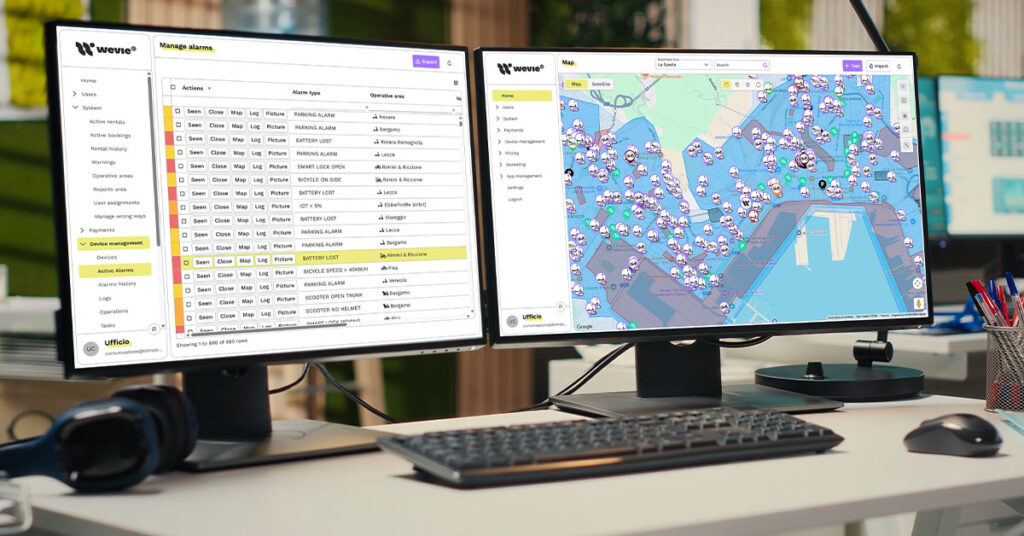
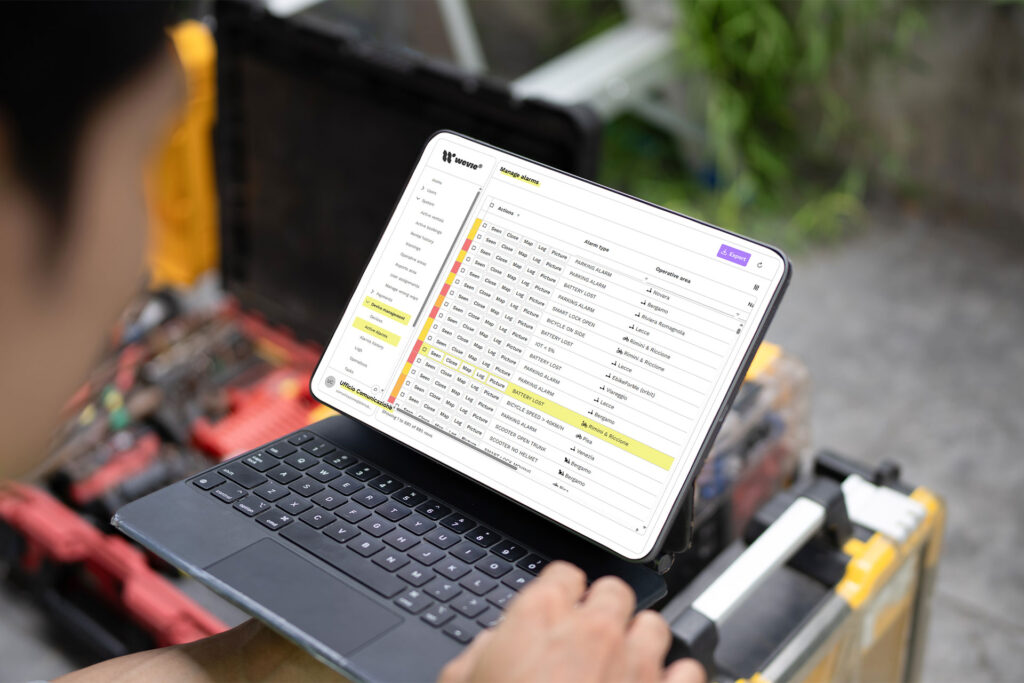
In this context, a platform like Wevie can help operators make technical and operational fleet management more structured. Through real-time vehicle monitoring, status management, alerts, remote diagnostics, data collection and field task organization, Wevie gives teams a clearer view of what is happening across the fleet.
From a maintenance perspective, the value is not simply knowing that a vehicle has an issue. The value is connecting that issue with its operational impact: where the vehicle is located, how often it is used, how long it has been inactive and what action should be triggered next.
For rental and sharing companies that want to reduce downtime and improve vehicle availability, this level of control can make maintenance more measurable and less dependent on emergency response.
To see how these capabilities can support everyday fleet operations, you can explore the Wevie features for shared mobility fleet management.
From unexpected failures to higher fleet availability
Predictive maintenance for shared mobility fleets should not be seen as a concept reserved only for large operators. Smaller fleets can benefit as well, especially when they start collecting the right data and using it to guide maintenance decisions.
The aim is not to predict everything. It is to reduce improvisation. When an operator knows which vehicles are more exposed to risk, which issues are recurring and which units have the strongest impact on service quality, maintenance becomes more organized.
In practical terms, a smarter maintenance approach helps operators:
- reduce predictable downtime;
- control unplanned repair costs;
- improve vehicle availability and service continuity.
For shared micromobility operators, this is a concrete efficiency lever. Fewer inactive vehicles mean more units available for users, more ride opportunities and a more sustainable operating model.
If your fleet is still managed mainly after problems become visible, the first step is to analyze vehicle data, alerts and repair history. From there, it becomes possible to build a more structured model, turning maintenance from a necessary cost into an operational lever for improving margins.